Our rivers and streams are essential to the health of Syilx Territory. They provide important habitat for salmon and other fish, support wildlife and plant life, and sustain the ecosystems that all living things depend on.
Over time, human activities and changes to natural waterways have impacted the health and function of many rivers and streams. Channelization, habitat loss, erosion, and changes to natural water flow can reduce the quality and availability of habitat that salmon need to survive.
River restoration helps address these impacts by rebuilding natural river processes, improving fish habitat, and supporting healthier, more resilient ecosystems.
How Restoration Supports Salmon
Salmon depend on healthy, functioning rivers throughout their life cycles. They need suitable spawning grounds, clean and flowing water, access to habitat, and places where young fish can grow and find shelter.
Restoration helps create and improve these conditions by:
- Improving spawning habitat: Restoring suitable gravel beds and river features where salmon can lay their eggs.
- Creating fish habitat: Improving pools, riffles, and areas of shelter where fish can rest, feed, and grow.
- Restoring natural water flow: Reconnecting floodplains and allowing rivers to move more naturally.
- Reducing erosion: Improving riverbank stability and supporting healthier waterways.
- Supporting biodiversity: Restoring natural vegetation and habitat for fish, wildlife, and other living beings.
RESTORATION INITIATIVES
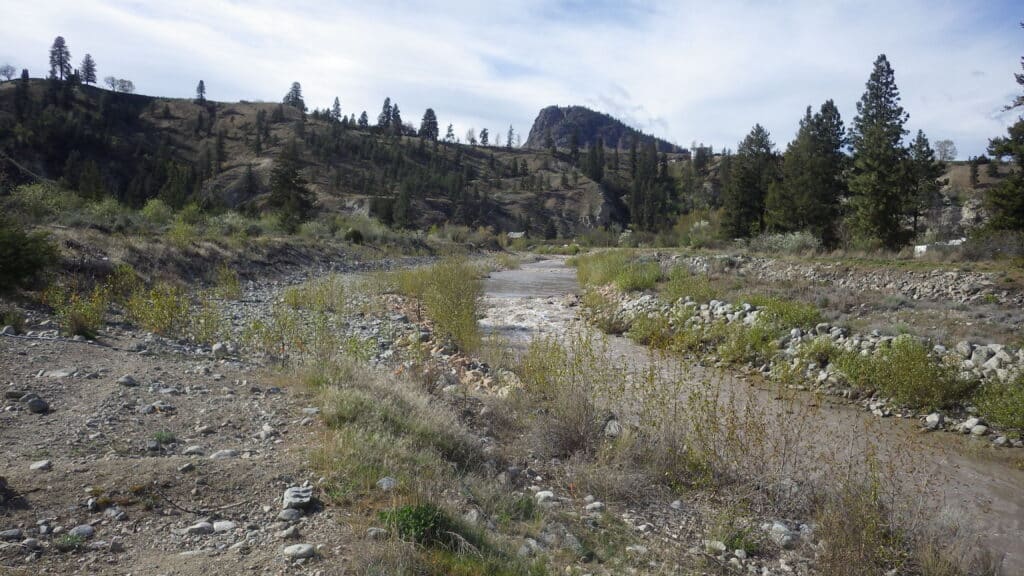
nluxʷluxʷɬcwix – lower Trout Creek Restoration
BACKGROUND: Trout Creek represents the Okanagan basin’s second largest watershed. This creek is a historically important creek for indigenous fish, especially salmonids (resident and anadromous). nluxʷluxʷɬcwix -lower Trout Creek was also historically composed of a large black cottonwood and water birch floodplain home to a great diversity of living beings, and which provided many ecosystem benefits.
Channelization in the 1940s and 1970s, and upstream landslides have severely degraded the creek, reducing kokanee spawning numbers from thousands to approximately 300 fish annually. The creek also lacks suitable fish habitat, including pools and natural cover needed to support fish and wildlife.
PROJECT GOALS: restore self-sustaining creek habitat form and function which requires minimized human intervention in the long-term, and which is compatible with upstream slide mitigation efforts. Construction includes:
- Floodplain re-engaged floodplain wetted according to 2-year freshet discharge (per natural floodplain).
- Widened bankfull (creek channel) width to restore more natural sediment/water movement in freshet.
- 4 riffles installed to help retain salmonid spawning materials and bring habitat diversity back to the creek.
- Installation of spawning gravels at the crest of each riffle (281m3).
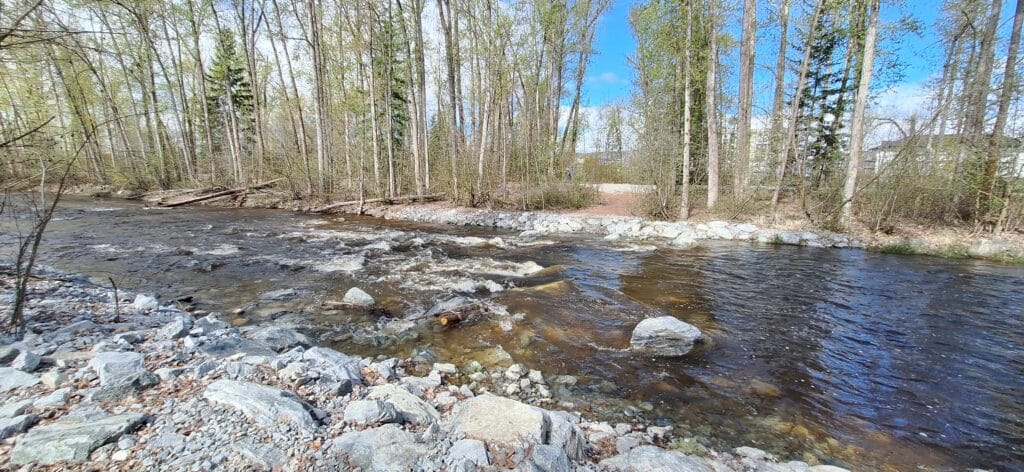
nx̌ʷaqʷaʔstn – Mission Creek Kokanee Spawning
Channel Improvement
BACKGROUND: nx̌ʷaqʷaʔstn currently supports the largest kokanee salmon tributary-spawning population in kłusxənitkʷ – Okanagan Lake. This creek is heavily damaged due to channelization. The kokanee salmon spawning channel was constructed in 1988 to offset some of the resulting impacts to kokanee salmon habitat.
PROJECT DETAILS: Beyond ecological benefits of supporting healthy salmon populations, the nx̌ʷaqʷaʔstn Kokanee Spawning Channel improvements will help reduce erosion risk and contribute to the overall health of Mission Creek. Restored salmon populations also support recreational opportunities and strengthen our community’s connection to nature. The kokanee salmon spawning channel intake requires
improvements to ensure the channel remains functional in the longterm for this crucial fish species.
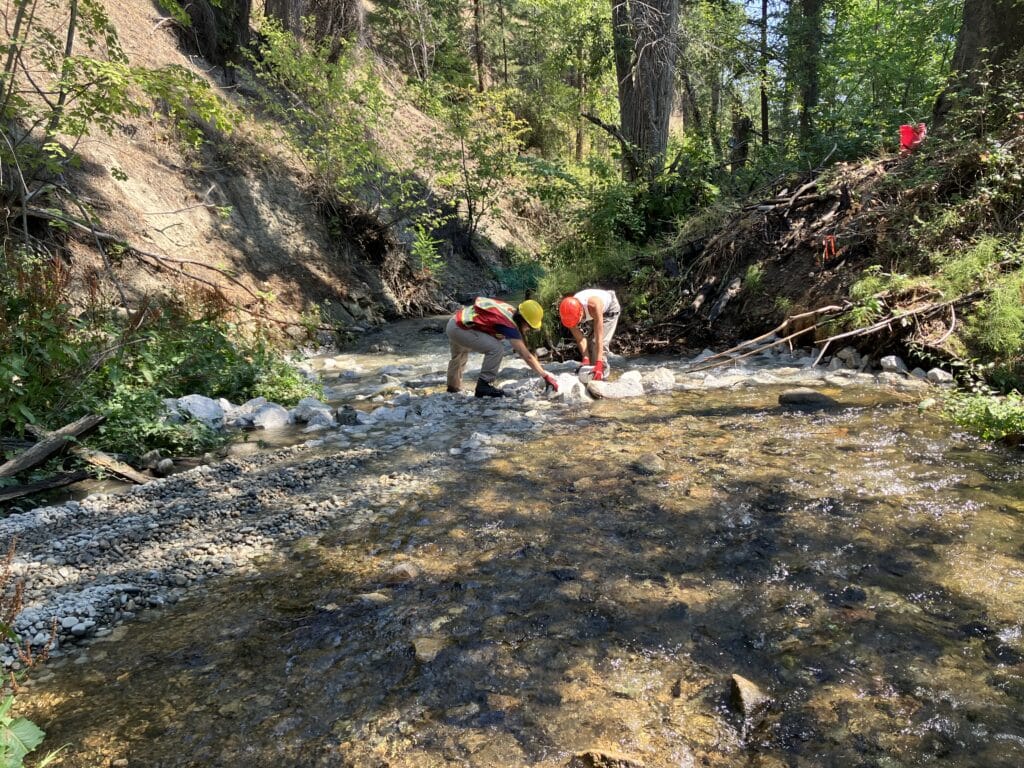
sqʷʔa Peachland Creek Restoration
BACKGROUND: sqʷʔa Peachland Creek provides important habitat for fish and wildlife and is the third largest producer of stream spawning kəkniʔ kokanee in the Okanagan Basin. The watershed has supported syilx Okanagan fishing, hunting, gathering and cultural practices for countless generations. Hardy Falls remains an important place for Indigenous caretaking of the watershed.
In the 1980s, 65 logs were installed below Hardy Falls to retain spawning sized gravel. Some of these logs had degraded, allowing gravel to move downstream and reducing the longevity of spawning habitat. Gravel has also accumulated near the creek mouth and constricted flow there.
PROJECT DETAILS: In August 2026, instream restoration work was completed below the first Hardy Falls bridge on Peachland Creek to replace aging log structures and improve spawning habitat.
INSTREAM CONSTRUCTION:
- Replaced aging log structures with two rock riffles to provide habitat diversity, retain spawning gravel, and support the creek’s natural flow.Placed spawning gravel upstream of the riffles to create new spawning beds.
- Completed all work as planned within Peachland Creek’s instream work window.
- Follow-up monitoring will assess riffle performance, spawning gravel response, and future kokanee use
NEXT STEPS Revegetation is scheduled for October 2026. Plants are being provided by the En’owkin center nursery. Monitor the riffles, gravel retention and habitat response after construction.
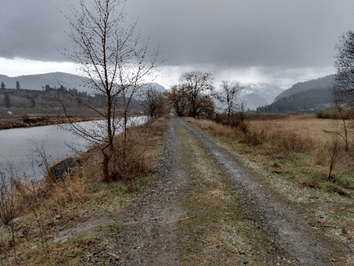
Restoring the Vaseux Floodplain
BACKGROUND: The Okanagan River was historically connected to extensive wetlands and side channels that supported fish, wildlife, and water quality. Channelization and diking disrupted these natural connections, contributing to habitat loss and declining fish populations.
PROJECT DETAILS: The Vaseux Floodplain Wetland Restoration Project, led by ONA and the Osoyoos Indian Band, aims to reconnect the floodplain, restore wetland ecosystems, and create important rearing habitat for Chinook salmon and other wildlife. Native vegetation will also help improve water quality, stabilize soils, and support biodiversity.
Contact
Email: habitat@syilx.org