Restoring native species habitat and reintroducing low-severity fires will improve fire resilience, benefiting the ecosystem and community.
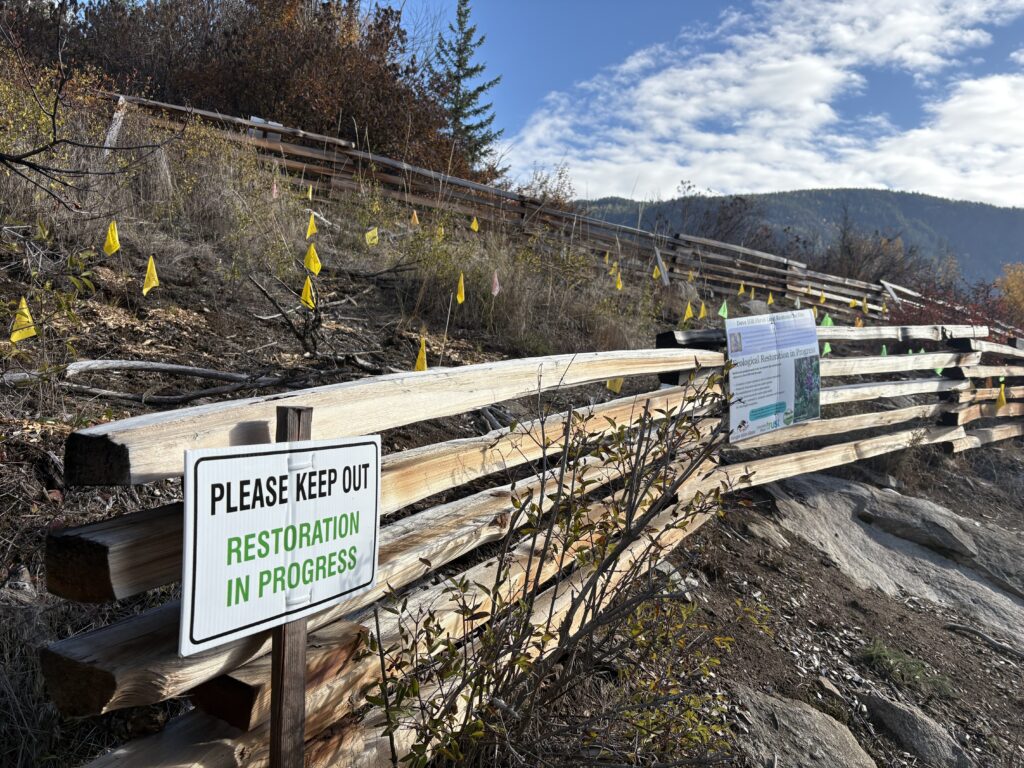
The Dove Hill brushland is an important mosaic of habitats inhabited by a wide range of ungulates, reptile and birds, including many species-at-risk. The Okanagan Nation Alliance aims to reduce the density of exotic and invasive plants at Dove Hill and support the native species suited to its low-elevation dry brushland ecosystem.
Restoring native species habitat and reintroducing low-severity fires will improve fire resilience, benefiting the ecosystem and community.
Background
Impacted by fire exclusion, invasive species and human encroachment, the Gb03 brushland (Dove Hill), specifically representing the Mallow ninebark – Oceanspray – Bluebunch wheatgrass non-forested brushland ecosystem, is red-listed by the British Columbia Conservation Data Centre (BCCDC). Additionally, the Dove Hill trail network represents an important recreational value for Castlegar and the Kootenay Community, providing a significant opportunity to promote awareness of the importance of fire in ecosystem stewardship.
With long-term fire suppression and exclusion of cultural burning practices, brushland ecosystems have been altered through forest ingrowth, changes in vegetation structure, health and habitat values. These changes have also resulted in increased fuel loading and wildfire risk in areas adjacent to communities.
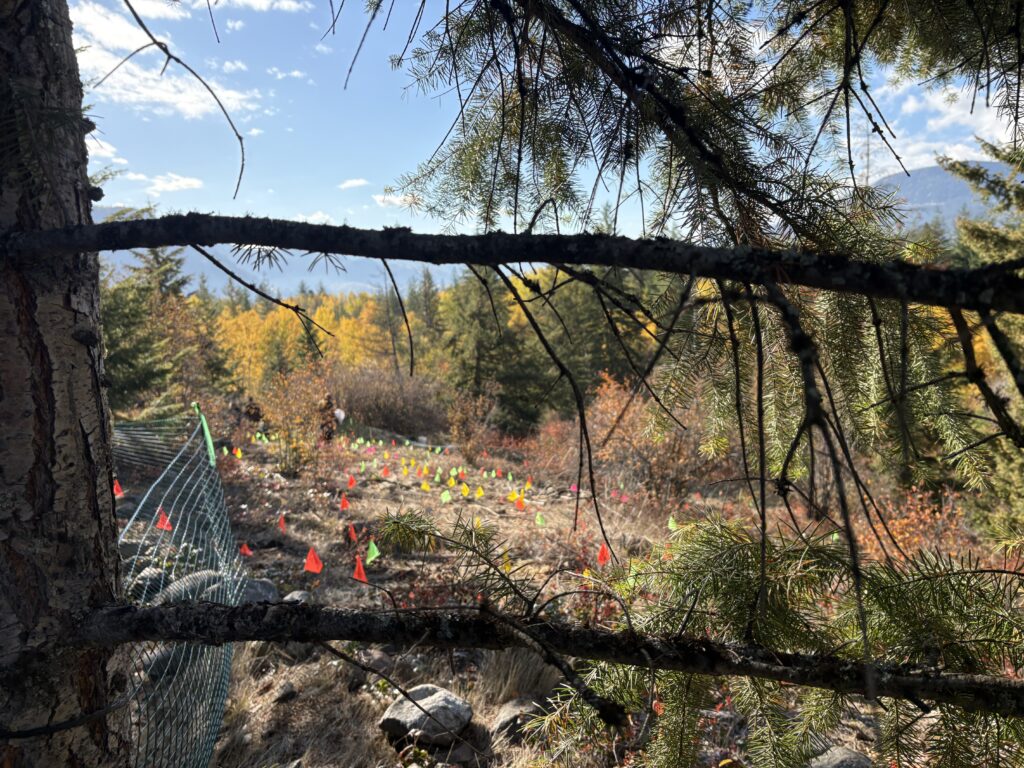
The project would seek to reintroduce low severity prescribed fire in prioritized treatment units in 26 ha of Dove Hill brushland. The aim is to enhance brush land health, protect native plant diversity and restore fire resiliency in a valued ecosystem to the benefit of both wildlife and community.
Project Goals
- Enhance Resiliency in a Red-Listed Fire Adapted Ecosystem
- Restore Native Plant Diversity
- Incorporate Indigenous Knowledge into Ecological Restoration
- Restore and Enhance Important Habitat for Ungulates
- Enhance and Protect Habitat for Species-at-Risk
- Protect Recreational Values and Promote Community Outreach Opportunities
- Increase Community Safety in the Wildland Urban Interface
Timeline
2026 – 2028
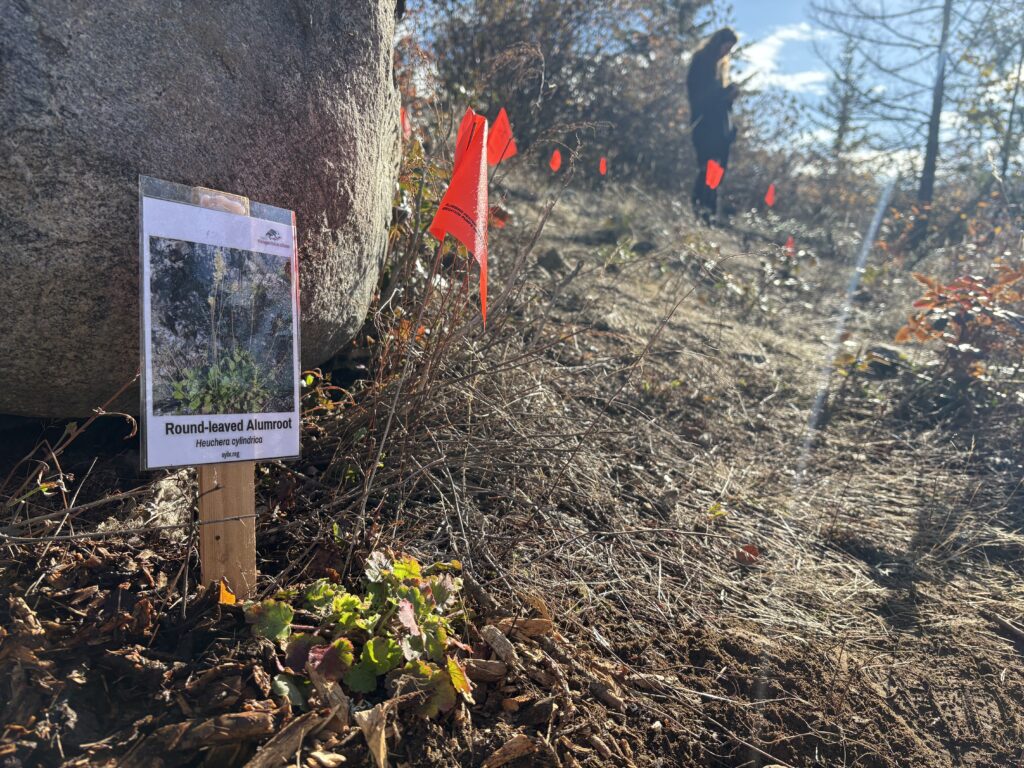
Invasive management, native plant enhancement (seeding/planting), burn preparation (thinning and large diameter tree protection).
2028
cikilaxʷm (prescribed burning) to reduce vegetation build-up that can fuel larger wildfires, help maintain brushlands for wildlife, and support native plants that depend on fire to thrive.
2029 – 2030
Invasive management, native plant enhancement (seeding/planting).
Culturally Important Plant Species:
- síyaʔ (saskatoon, Amelanchier alnifolia)
- ɬəx̌ʷɬax̌ʷ (chokecherry, Prunus virginiana)
- ʕacʕacaqs (biscuitroot, Lomatium triternatum)
- skʷlsiɬmlʼx (kinnikinnick, Arctostaphylos uva-ursi)
- wəx̌ wax̌ iɬp (mock orange, Philadelphus lewisii)
- st̕yiʔ (bluebunch wheatgrass, Pseudoroegneria spicata)
- q̓ʷəc̓q̓ʷc̓wixʷups (yarrow, Achillea millefolium)
- m̓cəmc̓iɬp (ocean spray, Holodiscus discolor)
- stax̌ cin (Columbia lily, Lilium columbianum)
- sx̌ ʷəsmiɬp (shrub) – sx̌ʷusəm (berry) – (soopolallie, soapberry – Shepherdia canadensis)
- mlmltiɬp (trembling aspen, Populus tremuloides)
- Orange honeysuckle (Lonicera ciliosa)
Species-At-Risk Habitat:
- p̓aʕs (Common nighthawk, Chordeiles minor)
- qʷayqʷaytʕaps (Western skink, Eumeces skiltonianus)
- aslaiyaʔqnə k̕ʷuxʷk̕ʷuxʷap (Rubber boa, Charina bottae)
- Yellow-breasted chat (Icteria virens)
- Fringed myotis bat (Myotis thysanodes)
Contact
Alysia Dobie, BSc, tmxʷulaxʷ (Land) Technician
Phone: 250-687-1897
Email: adobie@syilx.org
Additional Resources
Project Funded By:

This Project Is In Collaboration With: