Chronic wasting disease (CWD) is a fatal neurological disease that affects cervid species such as deer, elk, moose, and caribou ONA works to prevent, mitigate, and manage wildlife diseases across Syilx Territory as part of our inherent responsibility to sustain life on our territory.
what is cwd?
CWD is a fatal neurological disease that affects cervid species such as deer, elk, moose, and caribou. It is spread through contact and can remain active in the soil.
There are currently no confirmed cases of CWD transmitting to humans; however, CWD poses a threat to Syilx food sovereignty. CWD leads to significant declines in cervid populations, and the World Health Organization recommends NOT to eat CWD-positive meat.
CWD was recently detected near the Syilx territory in 2024 near Cranbrook BC and Spokane WA.
CWD has long incubation periods and infected animals often appear healthy. Testing harvested animals in affected and non-affected areas is critical for early detection and quick response to protect Syilx food sovereignty and the tmixʷ.
what are prions?
A prion is a protein in the brain folded in an unusual way, which causes other proteins around it to misfold as well, leading to permanent damage to the brain. This is what causes CWD.
Since it is a “structure” and not a live virus or bacteria, there are no vaccines or medications that can treat it. This is also why prions can remain “active” in the soil for many years.
Mad cow disease is an example of a prion disease that jumped the species barrier, affecting humans in a form called Creutzfeldt-Jakob Disease, which is linked to eating meat from infected cows.
PREVENT THE SPREAD
1. PROPERLY DISPOSE OF CARCASSES
Do NOT transport carcasses across the territory, especially from designated CWD Zones.
Debone carcasses on-site and leave the brain, spinal cord, and bones.
2. HANDLE HARVESTED ANIMALS WITH CARE
Wear protective gloves and disinfect equipment right after processing.
Avoid cutting through spinal tissue or brain stem where possible.
3. TEST, DONT GUESS
Submit your samples to be tested for CWD.
You are not only protecting yourself but also contributing to our surveillance program so new outbreaks can be caught early on.
HOW TO SUBMIT A SAMPLE
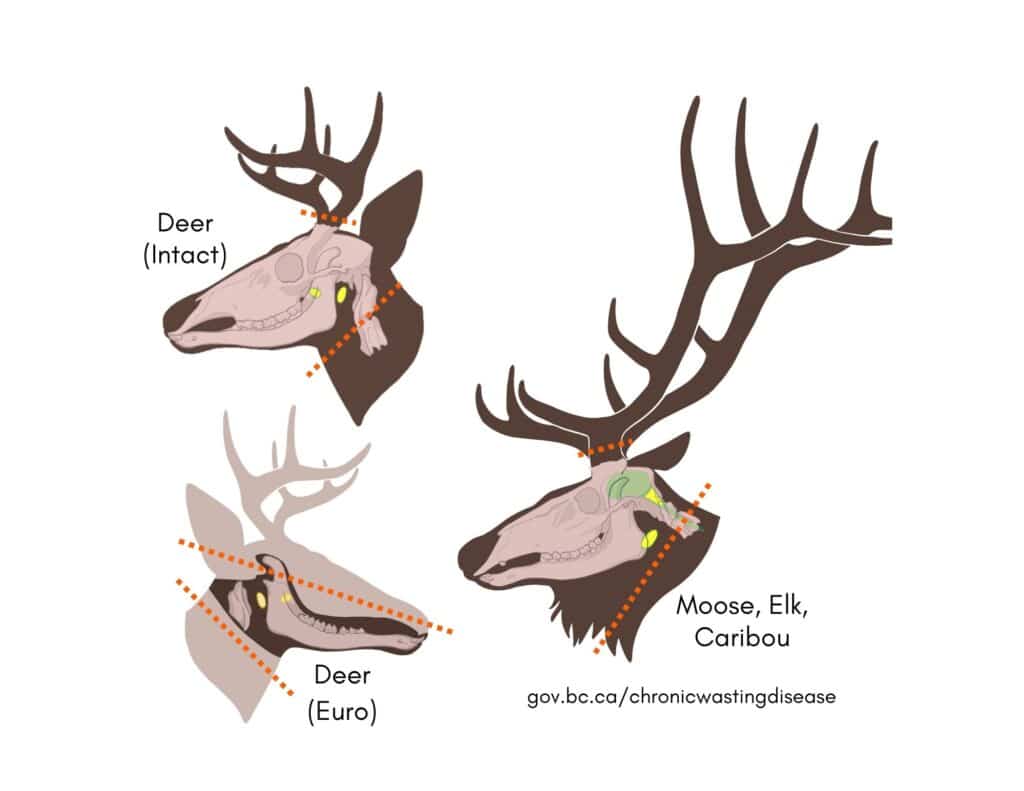
REMOVE THE HEAD
Cut off the head of the animal, removing the antlers and keeping at least 3 inches of the neck.
FIND A FREEZER LOCATION
Locations are available throughout Syilx Territory. See Below.
FILL OUT THE TAG
Fill out the tag provided in the freezer, attach it to the head of the animal. Make sure to keep the tear portion or take a photo of the ear card number.
SUBMIT THE SAMPLE
Place the head in a bag and put it in the freezer. You will be contacted within 2 to 4 weeks.
ɬə txətʼntiməlx mnimɬcəlx kʷu ks txətʼntimʼ
–When we take care of them, they take care of us
Syilx-led Drop-off locations
WESTBANK ONA OFFICE : 101-3535 Old Okanagan Hwy, Westbank BC
Open Monday to Friday 8:30 am – 4:30 pm (Closed from 12pm-1pm for lunch)
PENTICTON ONA OFFICE : 697 Wade Ave W, Penticton BC
Please call or email to arrange a drop off
Email: cwd@syilx.org
Phone: (250) 707-0095
CASTLEGAR:
The freezer is located at the Ootischenia (Castlegar) Landfill: 671 Columbia Road, Castlegar, BC and is accessible during the hunting season during the landfill’s business hours:
- Summer (April 1 to October 31)
Monday to Saturday
8:30 am – 5:30 pm - Winter (November 1 to March 31)
Monday to Saturday
8:30 am – 4:00 pm - Closed on all Statutory Holidays
ADDITONAL RESOURCES AND SAMPLE DROP OFF LOCATIONS VISIT CWD.BC.CA
Contact
ONA tmixʷ Team
Phone: (250) 707-0095
Email: cwd@syilx.org