The kł cp̓əlk̓ stim̓ Hatchery is a testament to the perseverance of the Syilx people to realize their dream of restoring the ntytyix (Salmon) – one of our Four Food Chiefs – to their original habitat and rightful place in our territory. This hatchery represents a critical stage of our Nation’s restoration initiative and is part of a long‐term program to restore the historical range of Sockeye in the upper Okanagan watershed, Okanagan Lake, and Skaha Lake systems, and a region of the Columbia River Basin. The facility is funded primarily by the Grant and Chelan Public Utility Districts, Washington, USA
Opened in 2014, our 25,000 square foot hatchery has the capacity to rear 8 million eggs. It is currently equipped to handle all fish culture aspects required for 5 million eggs from brood stock management until fry release. Sizing the facility for 8 million eggs allows for flexibility in the future, or to allow for changes in the fish culture activities. This facility is significant for the program, as it poses the least risk for the fish population, allows for maximum egg-to-fry survival, and permits monitoring of the interaction between Sockeye and Kokanee.
The hatchery utilizes three groundwater wells to supply 9.5 C for our stocks. A commercial water chiller provides us with the ability to closely mimic the natural conditions for the fish that we are raising. The hatchery monitors water use and water quality on a daily basis to ensure our facility operates to the highest standard.
The eggs are reared in two separate incubation rooms using a combination of Kitoi Box (bulk incubators) and Heath trays to incubate the salmon eggs from fertilized egg until the fry are ready to feed. Transfer of fry from the incubation room to the outdoor rearing tanks is done volitionally – wherein the fry swim out when they are ready, the staff do not handle them.
Rearing and feeding of the fry is done in 27 fiberglass raceways, each with a capacity for 275,000 fry. 23 of these raceways are fiberglass, 18 cubic metres each and the other 4 are aluminum, 2.2 cubic metres Staff will hand feed the fry to ensure that no feed is wasted and the water quality is of the highest quality.
Release of the fry is by one of two methods. Fry can be released directly to Shingle Creek from their raceway through a fish transfer piping. Other releases are done with transport tanks on a flatdeck trailer. At this time all releases are done when the fry reach one gram in May/June.
The hatchery is currently in the process of amending our aquaculture license. This amendment will allow us to culture different food fish species at the hatchery, including: Sockeye, Kokanee, Chinook, White Sturgeon and Rainbow Trout.
kł cp̓əlk̓ stim̓ Laboratory
The kł cp̓əlk̓ stim̓ Laboratory provides critical information and data on the effectiveness and impact of fisheries management decisions, and the health of the returning sockeye. In the autumn, returning spawners are surveyed for diseases to determine the health of the population. The hatchery sockeye fry are tested in our own laboratory to ensure they are free of viruses before they are released. Additionally, we monitored the size, diet, age, and origin of the juvenile fish and returning spawners in Skaha and Osoyoos lakes. This data has provided critical information on the effectiveness and impact of fisheries management decisions and the health of the sockeye return.
By sampling and testing sockeye populations the fish can tells us a lot. For example:
- DNA work shows that reintroduction is succeeding with larger numbers of sockeye returning to spawn in Skaha Lake every year.
- Sockeye hatchery fry are free from IHN virus prior to release.
- Disease prevalence in returning spawners varies year on year.
- Okanagan sockeye exhibit a four year population cycle.
- There are more non-hatchery fish in Skaha Lake than hatchery fish.
- Average length of smolts leaving Skaha Lake is larger than those from Osoyoos Lake.
The laboratory has expertise in sampling fish, aging from scales and otoliths for a wide range of species, thermal mark checking, macroinvertebrate sorting, stomach contents analysis, water chemistry, and virology including cell culture.
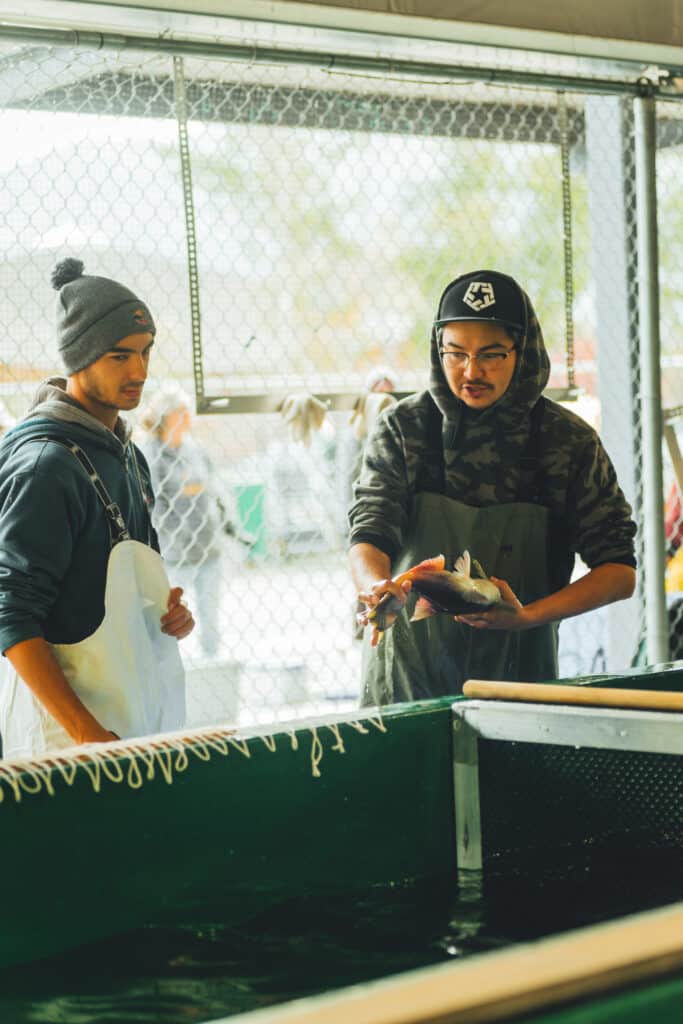
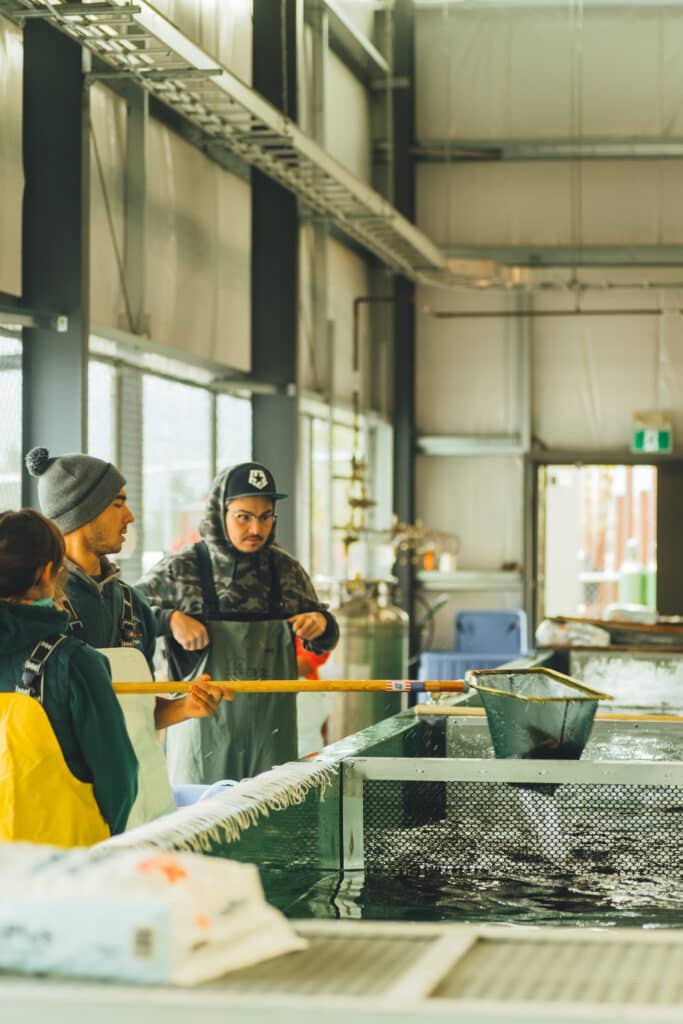
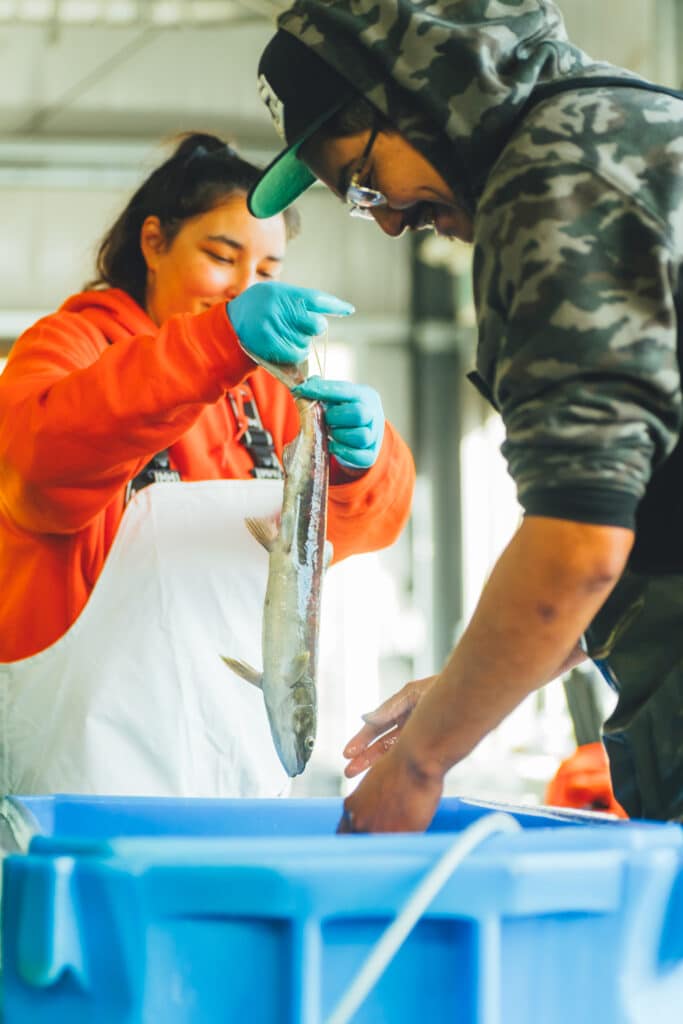
kł cp̓əlk̓ stim̓ Tours
kł cp̓əlk̓ stim̓ Hatchery Tours are available year-round by appointment.
What to expect:
- Approximately 1 hour in length
- Hands-on learning experience
- Opportunities to ask questions and engage directly with knowledgeable guides
To book a Tour Contact our Hatchery Staff:
Contact
Dan Stefanovic (Hatchery Operations Biologist)
Email: dstefanovic@syilx.org
Contact
Tyson Marsel (Hatchery Biologist)
Email: tmarsel@syilx.org