As part of the kł cp̓əlk̓ stim̓ initiative, ONA has been successfully beach seining and collecting eggs and milt from adult Sockeye in the Okanagan River for rearing and release into various tributaries within the Syilx Okanagan territory since 2004.
Bringing the salmon back to the Okanagan Basin from the brink of extirpation required a tremendous effort, one that the ONA started in 1997. Decades of advocacy, partnerships, and the milestones achieved over the past 30 years have helped restore the river’s ecological function and support the return of fish, wildlife, landscape and people. The benefits extend beyond Sockeye salmon to encompass all aquatic species, terrestrial wildlife, birds, and the communities that depend on, and steward these ecosystems.
Starting in 2004, ONA began stocking Skaha and Osoyoos Lake with hatchery-reared fry and monitored their growth, survival, and impacts on the Skaha Lake food-web and effects on kokanee populations. Results so far have been very promising; the program has been a success story. As of 2014, ONA has been rearing the fry in our own kł cp̓əlk̓ stim̓ Hatchery.
Since then, millions of sockeye fry and thousands of chinook fry are released into various tributaries of the Okanagan and Columbia River systems each year as a result of the broodstock process.
GOALS
- Collect eggs and milt from 900 – 4000 ripe female and male Sockeye salmon (1-5 million eggs)
- Follow best practices to maximize egg survival
- Collect ovarian fluid and kidney tissue for disease testing and screening
- Biosample 400 adults for fork length, sex, DNA, and hatchery marks
THE PROCESS
Using beach seines in areas anticipated to hold salmon, the catch is sorted to return non-target native species, such as trout or juvenile salmon, as well as remove invasive species, so only mature salmon are collected for spawning.
Beach seines are safer than other nets, like gillnets, as they herd the fish together rather than entangling them, leading to a high post-release survival rate. This makes beach seines the preferred method for research and broodstock collection.
PARTNERS
ONA works in partnership with regulating agencies (Federal and Provincial) and they are aware of all our projects. ONA is a founding member of the Canadian Okanagan Basin Technical Working Group (COBTWG), which provides technical and management recommendations for the Reintroduction Program.
The Syilx Okanagan Nation has never signed treaties, nor relinquished our right to harvest and manage the fishery. Ultimately, ONA is working to study, manage, and rehabilitate the native fish community and aquatic resource as whole.
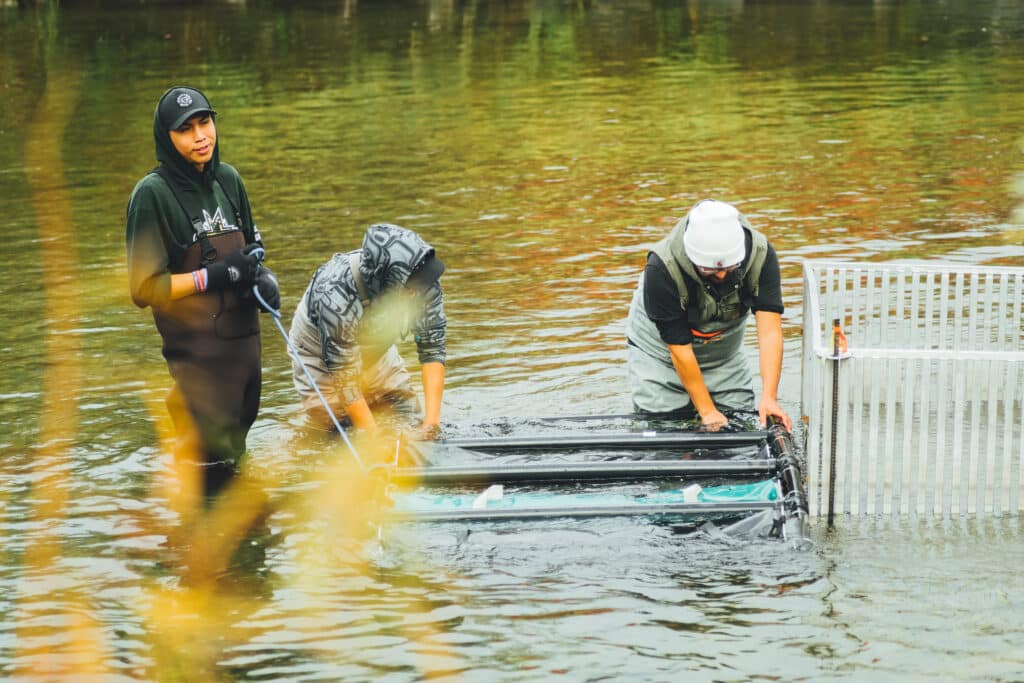
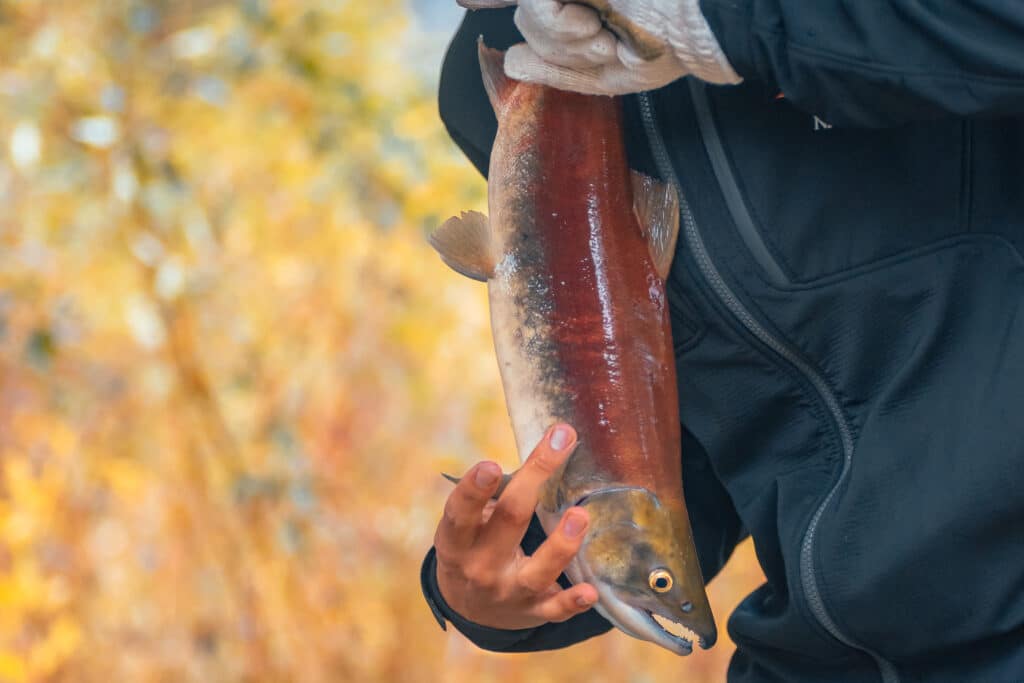
Broodstock: Catching Salmon for Egg Collection
Post-Broodstock: Sampling for Monitoring & Testing
Contact
Ryan Benson, M.Sc Fisheries Biologist
Phone: 250-707-0095 ext. 309
Email: rbenson@syilx.org